The Wishlist Becomes the Work
Every C-suite I have ever sat across from carries a wishlist. The work they know would move the needle, that never makes the roadmap. For 20 years that gap was the cost of doing business. That equation no longer holds.
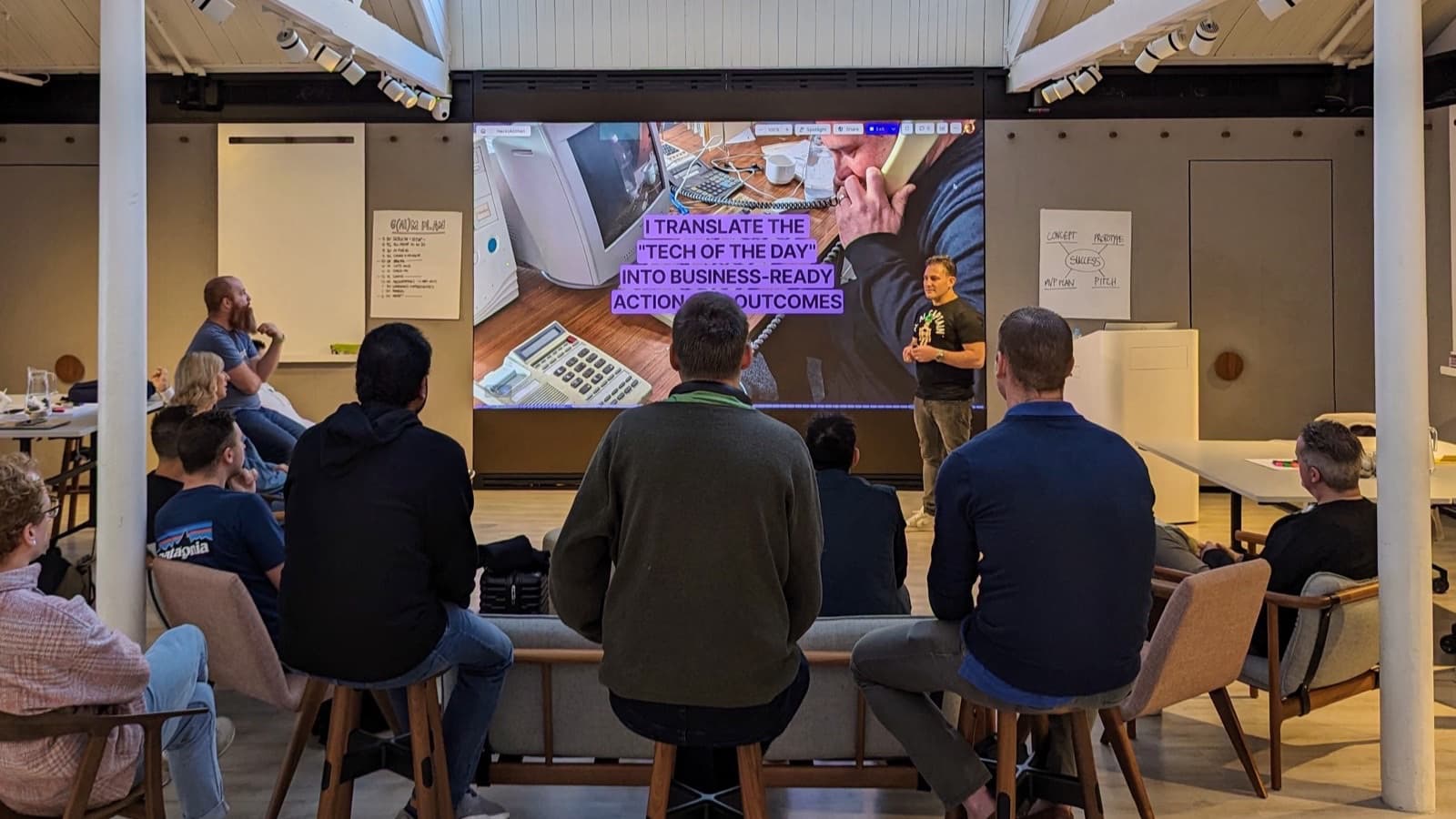
This is the story that started it all for me.
Years ago, my old agency would have run a company values project like this. Six people. Six weeks. Sixty thousand dollars. Maybe six words at the end of it. Workshops, surveys, alignment sessions, drafts, edits, more drafts. By the time you reached the wall, the wall was the only thing left. Six words. Hopefully memorable. Often not.
I know this because I was the one quoting the work.
Then I walked into a boardroom to run a creativity workshop for a CEO and his team. I looked up. Their values were posted on the wall. I turned to the person next to me and asked them to name one. They said, "I don't know. I think teamwork's one of them. They're on the wall."
A week later the CEO called. He wanted a values consultant.
I sat down on a Monday morning. I primed my AI properly with the context, the audience, the stakes, and the way we used to run the work. I prompted it the way I would brief my team. Then I pushed it into the produce layer. By 2pm that day I was done, at a quality I would have walked out the door with under the old model.
I posted about it on LinkedIn. It was the first time I had drawn the line in public between what AI could do and what most people were actually using it for. Years later, that story still lands every time. Not because the tools were new. Because of what it pointed to underneath.
The thing nobody talks about: the C-suite wishlist
Every executive I have ever worked with has a wishlist.
The reports they wish they could build. The customer experience they wish they could design. The deeper analysis they wish they could commission. The proper rehearsal before the high-stakes meeting. The personalised onboarding for every new starter. The vendor consolidation they have been meaning to run for three years.
That wishlist is not lazy thinking. It is the work that would move the needle. But it never makes the roadmap. Not because the ideas are wrong. Because the budget does not exist to deliver them. Or the time does not exist. Or the team is already at capacity. Or the business case is too soft to justify the spend. Or the work falls between two departments and nobody owns it.
So the wishlist sits there. In offsite notes. In strategy decks. In the heads of executives who know exactly what would unlock the next stage of growth, and who have made peace with the fact that it will never see the light of day.
That is the Ambition Gap. The space between the work you do today and the work you know would matter most.
What changed
For 20 years that gap was the cost of doing business. The wishlist stayed a wishlist because the work behind it required people, weeks, and dollars you did not have.
That equation no longer holds.
The values project is the proof. Six people, six weeks, sixty thousand dollars collapsed into one person, one morning, in-house. No agency. No procurement cycle.
The unlock is not "AI helps you do the work faster." The unlock is that the work can now be activated internally, with internal resources, in record time. That is a different sentence. It changes who delivers the work, where it happens, how fast it ships, and what it costs. It also changes which work is even possible.
Three proofs the pattern holds
The values project was 2023. The pattern is not a one-off. Here are three more from the field, recent enough to test the claim.
Six thousand dollars in twenty minutes
I run workshops with big teams. Tools come up. I jump on, subscribe, test, and four months later I have forgotten I am paying for half of them.
So I took 15 months of credit card data and loaded it into Claude Cowork. I primed it as an elite financial analyst and asked for a spending overview, pattern analysis, and waste detection. What came back was an Excel file with multiple tabs. Tool-overlap detection that flagged my AI video stack as consolidatable. Community platform overlaps. A colour-coded keep, review, and overlap list.
Twenty minutes later I had clawed back six thousand dollars in recurring subscriptions I was not even using.
Now run that at the org level. Replace credit card data with the general ledger. Replace personal subscriptions with vendor contracts. Replace 20 minutes with a Monday morning. That is a wishlist item. Spend audit, vendor consolidation, procurement review. Normally a project. Normally external. Normally six figures. Now internal. Now this week.
Twenty years of unchanged health insurance
Same private health insurance since I got married. Maybe before. Never changed it. You know the pattern. Think about it. Dismiss it. Move on. The switching cost in your head is too high.
I loaded my current policy and full claims history into Cowork and asked it to find me something better. What came back was not a recommendation. It was a built dashboard. Current premium, annual cost, hospital excess, side-by-side of what I was using versus what I was paying for, family needs, shortlisted providers, estimated annual savings. Then it generated the call script for the awkward phone calls I needed to make to switch.
Twenty years of putting it off. Dismantled in one session.
The same logic applies to every vendor review, contract renegotiation, and supplier audit on a CPO's wishlist. The reason it never gets done is not that nobody wants the answer. It is that the build cost of getting to the answer was too high. That cost has collapsed.
The CFO who turned his board report into a storybook
I was on stage demoing how to brief Gemini's Storybook tool to write a children's book about Charlie, a seven-year-old whose mum is a CFO and dad is a CPO. The audience laughed at the made-up brand's "high crunch retention rate."
After the talk, a CFO at a large restaurant chain went back to his office and did something I did not expect. He took his next board report and ran it through his secure Workspace environment with a "make a storybook out of this" prompt. He did not present the storybook. He used it to find a new narrative arc through the data. The story he then told the board was sharper because of the play.
A wishlist item most CFOs never get to. Spend a week finding the real story in the numbers before walking into the board. Nobody has that week. He had an hour. The hour was enough.
How the wishlist actually gets activated
There is a three-step move that separates "we tried AI and it gave us mush" from "we shipped the wishlist in two weeks." I call it Prime, Prompt, Produce.
Prime. Set the context, the intent, and the constraints. Onboard your AI the way you would onboard a senior hire. Most people skip this entirely. It is the single biggest determinant of output quality.
Prompt. Precision over speed. Manage your AI the way you would manage a sharp colleague. Stop typing one-line questions into a chat box. Brief it.
Produce. This is where most teams stop too early. Push for the artifact. The dashboard. The Excel file. The board narrative. The call script. The decision memo. The thing you can ship.
Skip Prime, you get noise. Stop at Prompt, you get a slightly better search engine. Push through to Produce, and the wishlist becomes the work.
The reframe
The AI conversation has been stuck on productivity for too long. Productivity is the wrong frame because it assumes the work stays the same and you just get faster at it. That is a finite game with a low ceiling.
The Ambition Gap is the right frame because it changes the work itself. The reports you wish you could run. The audits you wish you could commission. The customer experience you wish you could design. The personalised touch you wish you could deliver at scale. The proper rehearsal before the meeting that matters. The deeper analysis before the decision that matters more.
All of that is on the wishlist of every C-suite I have ever sat across from. For two decades it needed budget and time you did not have. Today it can be activated internally, with internal resources, in record time.
Stop optimising the work you already do. Start activating the work you never got to.
Justin Kabbani
AI Keynote Speaker, Strategist & Trainer
Turn your wishlist into the work
Justin runs AI strategy and training that helps leadership teams activate the work that has been sitting on the wishlist for years. Internal resources. Record time.
Explore AI Strategy & Training