Stop Buying AI. Start Running It.
Almost every boardroom is asking how much to invest in AI. It is the wrong question. The right one is how often. The shift from CapEx to OpEx is the difference between a rollout that stalls in 18 months and one that compounds for a decade.
Almost every boardroom in the country is asking the same question right now.
How much should we invest in AI?
It is the wrong question. The right question is not how much. It is how often.
That single shift, from how much to how often, is the difference between an AI rollout that quietly stalls in 18 months and one that compounds for a decade.
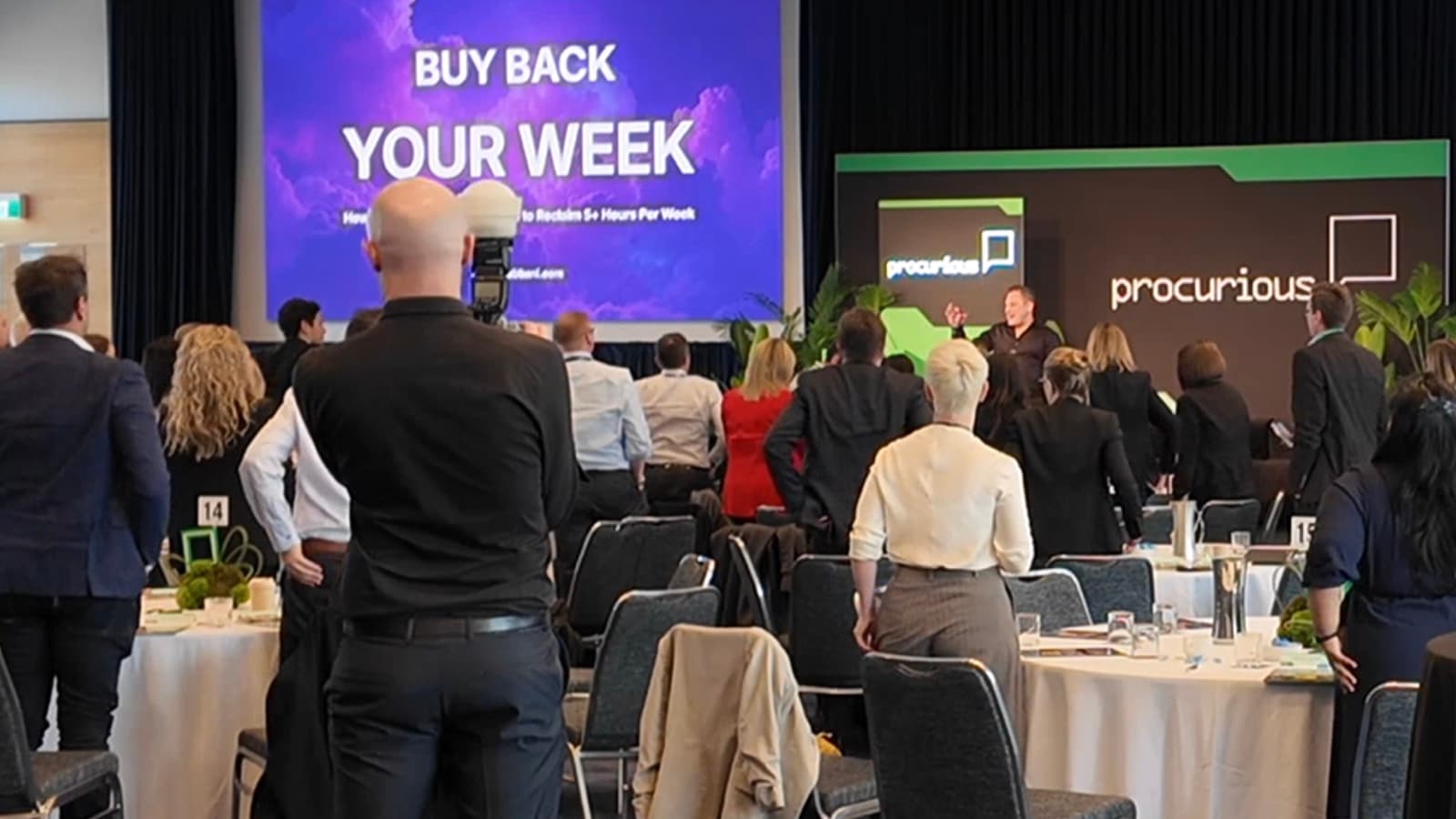
I stood in front of a room of CFOs and CPOs at a finance forum a few weeks ago and opened with one line. Buying back your week is an OpEx question, not a CapEx question. The room paused. Then nodded. Then sat forward. Because every person in that room had been working off the wrong financial model for AI, and they knew it the moment the line landed.
The CapEx default
Here is what most businesses are doing right now.
They have an AI line item in next year's budget. They are running pilots. They are issuing RFPs. They are scoping platform decisions. They have a project manager, a change lead, a vendor evaluation matrix, and a six-month rollout plan.
This is the CapEx playbook. The same one your business has used for every system implementation for the last 20 years. ERP. CRM. HRIS. Same shape. Same governance. Same procurement cycle. It is comfortable. It is defensible. And it is killing your AI value.
Here is why. CapEx logic says we will buy a thing, install the thing, train people on the thing, and measure the thing. It assumes the technology is the asset. It assumes the value sits inside a platform.
AI does not work that way. AI value does not sit inside the platform. It sits inside the daily habits of the people using it. The platform is downstream. The habit is the asset.
Treat AI like CapEx and you spend 18 months optimising the wrong layer. You end up with a beautifully governed pilot that has changed nobody's Monday morning. I have watched this happen in mid-market, in enterprise, and in government. Same pattern, different logos.
The OpEx reframe
The reframe is simple. AI is not a system you implement. It is an operating habit you build. You do not buy it once. You run it every day. Daily default, not annual budget cycle.
That language matters. The moment a CFO classifies AI as OpEx, three things change.
The time horizon collapses. OpEx is monthly. OpEx is operational. You are not waiting for a steering committee. You are running the habit this week.
The unit of value changes. It is no longer the platform. It is the person, and what that person can now do in a day.
Ownership changes. CapEx projects belong to IT. OpEx habits belong to the operator. AI value lives with the operator. Always has, always will.
The big things: a six-figure project, absorbed in-house
A leader who had been through one of my workshops came up at the end of the day. His business needed ISO certification. The plan was to run it externally. Six figures, plus, and a few months on the clock.
He had watched the certification process happen a couple of times before. He had the reference material. So he made a different call. "I reckon I could do most of this in-house," he said, "if you help me with the prompting and walk the team through it."
We got 80 to 90 percent of the way there. The external cost collapsed. And the person who would have project-managed a vendor instead built the capability inside their own role. The work got done, the bill shrank, and a human got elevated to higher-value work in the same move.
Look at the financial shape of that. The old way was CapEx. Six-figure project budget, external vendor, defined scope, gate reviews. The new way was OpEx. One person already on the payroll, a tool that costs less per month than the coffee budget, the work done inside their normal operating rhythm. Same outcome. Different column.
That is the OpEx unlock on a big-ticket item. The same shift is happening across every category of work that used to require a procurement decision and a project plan. I have written about more of these in The Wishlist Becomes the Work.
The small things: a day in the operating rhythm
The big-ticket wins get the attention. The compounding happens in the small ones. Here is what a day looks like once AI is the operating habit, not the annual project.
You wake up to a daily briefing. Every external party you are meeting today, what you are doing for them, what you are doing with them, the context you need before the first conversation.
You triage your inbox in minutes. A summary of what landed overnight, what needs a reply, what can wait, drafted responses ready for the ones that matter.
You walk into the meeting with a play. You have rehearsed it with AI. The objections, the angles, the version of you that has already had the conversation once.
You walk out with the record done. Transcript captured. Notes written. Everything stored. The meeting analysis sent before you have made your next coffee.
You have an idea after lunch. You sit down for an hour and build the thing. Not a brief for someone else to build in six weeks. The thing itself, shipped that afternoon.
None of these is a project. None needs a budget line or a steering committee. Each one is small. That is the point.
Why the small things are the real story
There are small things where AI makes a big difference, and big things where it makes a big difference. The ISO certification was a big thing. The daily briefing is a small thing. Both matter. But the small ones matter more than they look, because of what happens when you run them every day.
This is the Compounding Capability Model. Small wins, implemented consistently, create exponential results. The briefing saves you 20 minutes and walks you into the day sharper. The meeting play wins you the room. The hour of building ships something that used to sit on a wishlist for a year. On their own, each is minor. Run daily, across a leadership team, for a year, they compound into a different business.
CapEx thinking cannot see this. It is looking for the big asset, the platform, the launch. The compounding lives in the Monday-to-Friday operating rhythm that no implementation plan ever captures.
What flips when you switch columns
Move AI from CapEx to OpEx and the operating model changes underneath you.
Adoption metrics change. Logins per week stop mattering. The new question is whether this person operates differently today than they did six months ago. Behavioural change, not platform usage.
The resource model changes. You stop staffing implementation teams and start funding capability inside the operator. One person, deeply skilled, beats a six-person project team every time.
Vendor selection changes. You stop choosing platforms that demand workflows and start choosing tools that disappear into daily work. The best AI tool is the one your team forgets they are using.
Procurement compresses. A 12-month evaluation for an AI tool is a confession that you do not understand the tool. Most of the value lives in the first 90 days of contact with it.
Five moves a CFO can make this quarter
If you want to flip the column inside your business, these are the moves I would put in front of your exec team on Monday.
Cap the CapEx column on AI. No new AI capital projects this quarter. Move every AI spend line to OpEx and force the operating model to absorb the capability. This is the single biggest unlock.
Fund time, not platforms. Give every senior leader two protected hours a week to build AI fluency inside their actual job. No course, no certification. Two hours, real work, every week. Track it.
Make the senior team the early adopters. AI inside an organisation rises to the level of its most senior daily user. If your exec team is not on the tool, nobody else will commit.
Measure behavioural change, not platform usage. Pick three to five operating habits you want across the leadership team. Calendar audit. Inbox triage. Pre-meeting brief. Post-meeting follow-up. Measure those.
Set unreasonable expectations. Tell the operator that the work they used to do in six weeks now sits in a day. Refuse the old timeline. That single act of leadership creates more AI value than any platform decision.
The next five years
The businesses that win the next five years will not be the ones who bought the most AI. They will be the ones who built the deepest AI habit.
Some will run on Copilot. Some on ChatGPT. Some on Claude. Some on tools that do not exist yet. The platform layer will keep churning. The platforms are the easy decision. The hard decision is the habit.
The boardrooms still asking how much will spend more and get less. The boardrooms asking how often will spend less and compound for a decade.
Stop buying AI. Start running it.
Justin Kabbani
AI Keynote Speaker, Strategist & Trainer
Build the habit, not the project
Justin works with leadership teams to move AI from the CapEx column into a daily operating habit, with the training and coaching that makes it stick.
Explore AI Strategy & Training